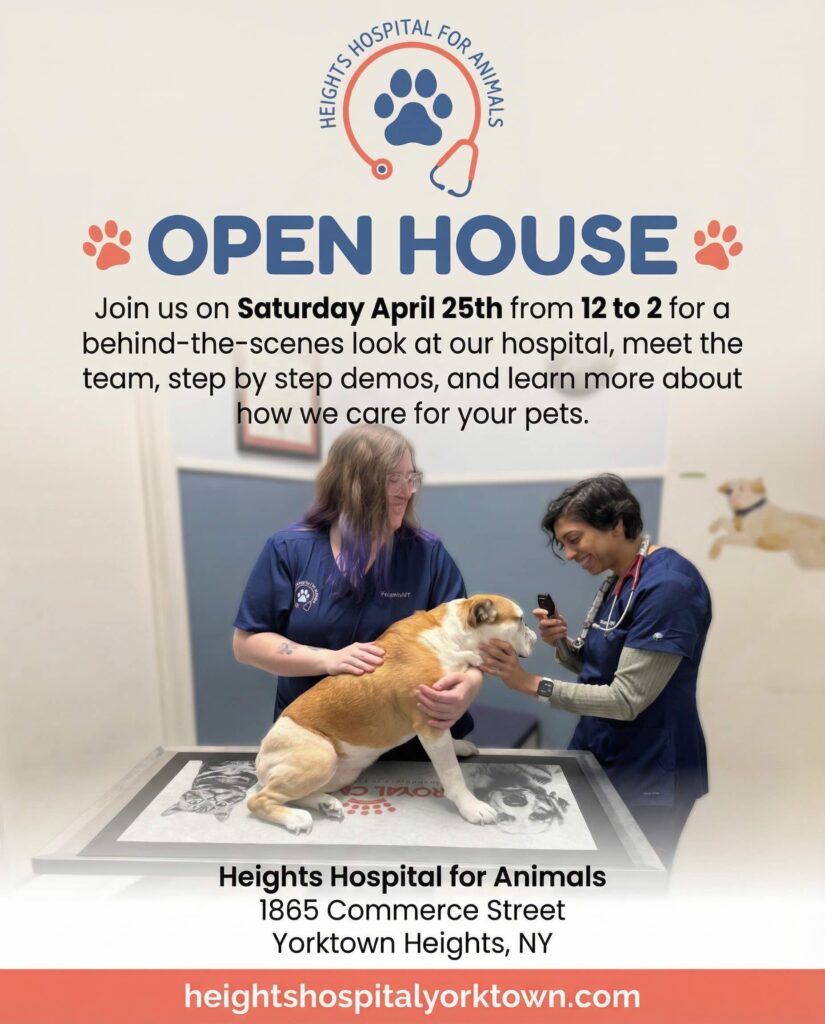
Although we don’t like to think about it, emergencies are an unfortunate part of life and of pet ownership. Knowing how to identify an emergency, and when to seek help is an important first step in resolving a medical issue. Thankfully, Dr. Aparna Modi and her medical team at Heights Hospital for Animals in Yorktown Heights NY are here to help you if you experience a pet emergency!
Just like people, pets can experience serious medical events that qualify as an emergency, and some emergencies are more straightforward than others. For example, it may be well-known that ingesting chocolate can be toxic to your pet, but did you know that ingesting sugar-free gum, candies, and spreads like jam/peanut butter can also be life-threatening to your pet?
If you’re unsure, it never hurts to reach out to your veterinarian. Remember, there’s no such thing as a “Dumb Question” when it comes to your pet’s health!
What Are Some Potential Emergencies That Might Not Be Obvious?
Events like being struck by a vehicle, breaking a bone, or suffering major wounds present as obvious emergencies/urgent situations. However, there are some other circumstances that may not necessarily sound like an emergency, but could actually be one!
My cat is vocalizing in the litterbox, or hopping in and out of the litter box frequently.
While this may not seem like a big deal or just seem “quirky”, these signs can mean something very serious. Male cats are prone to a condition called urinary blockage. This occurs when something such as a stone, a mucus plug, or even inflammation blocks the urethra (the tube that carries urine from the bladder to outside the body). This means that your pet is unable to pass urine, or can only pass very small amounts of urine. This can be life-threatening. Urine builds up in the bladder and will eventually back up into the kidneys, causing kidney damage. If untreated, the bladder could potentially rupture, leading to urine being released inside the abdominal cavity. Any change in litter box habits (especially related to the passing of urine) should be treated seriously. Please reach out to Heights Hospital for Animals if you suspect your cat may be blocked.
My pet ate a grape/raisin!
While many fruits (such as apples, watermelon, blueberries, etc) are safe to share with your pet in moderation, grapes and raisins are notable exceptions! Grapes/raisins contain a compound that can damage your pet’s kidneys. Even a small amount can potentially be dangerous for your pet. The effects of grape/raisin toxicity can vary from pet to pet, so if you suspect your animal has gotten into grapes or raisins it’s important to contact your veterinarian as soon as possible.
My cat licked/interacted with a lily plant.
It may not seem like a big deal for a pet to interact with a common houseplant, but lilies are actually highly toxic to cats. All parts of the lily plant (petals, stems, leaves, roots, etc) are toxic to cats, including the pollen and even the water present in the vase/pot! Lilies can cause kidney failure and even death in pets that come into contact with them. Just licking/chewing on a part of the plant can cause toxicity. If you believe your cat has interacted with a lily plant inside your home or outside please contact your veterinarian immediately!
My pet got into gum/mints or some other sugar-free candy/item.
Gum, lozenges, mints and candies often come in sugar-free varieties. A common artificial sweetener used in sugar-free items (even peanut butter and jams/spreads), is called Xylitol. Artificial sweeteners like Xylitol are highly toxic to pets! Xylitol can cause damage to the organs like the liver, and can also drastically lower your pet’s blood sugar. When an animal consumes an artificial sweetener like xylitol their body produces insulin (the hormone that helps transport glucose from the blood into the body cell’s, lowering blood sugar). However, this artificial sweetener cannot be used by the body like glucose can, so their blood glucose levels plummet. Blood glucose levels can drop so much that your pet could begin to experience seizures, lose consciousness or even pass away. Even a small amount of a sugar-free item can cause life-threatening effects on your pet. Time is of the essence, if you believe your pet could’ve gotten into sugar-free gum, candy, spreads, etc contact your veterinarian right away.
These are only some incidents that constitute an emergency (that may not seem emergent on the surface). There are other situations that could be serious and warrant quicker intervention than others.
Issues relating to the eye (rubbing, discharge, changes in the appearance of the eye, vision changes etc), should be addressed as soon as possible. While not immediately life-threatening, eye problems can be a very time sensitive issue.Time is of the essence if your pet’s vision is affected; how quickly your pet receives medical care could mean the difference between potentially restoring or losing vision. Corneal ulcers (lesions on the clear part of the front of the eye), can deepen or spread very quickly. If there’s other trauma to the eye your pet should see a vet as soon as possible. Eye/eye socket injuries can progress quickly and may even require removal of the eye if severe enough.
Sometimes serious but not immediately life-threatening symptoms such as vomiting or diarrhea could become an emergency if your pet is experiencing them for an extended period of time.
If you’re unsure if your pet is experiencing an emergency it’s always a good idea to reach out to your veterinarian.
Depending on factors including the severity of your pet’s case you may be referred to an emergency veterinary facility. Much like human emergency rooms, these facilities are often open 24/7, have advanced imaging/monitoring/treatment equipment and a team of specialists to help your pet through a crisis.